

A brake pedal that feels soft, spongy, or sinks toward the floor almost always means your hydraulic system has lost pressure, whether from trapped air, a fluid leak, or a failing master cylinder. This is not a wait-and-see problem. If the pedal sinks all the way down, stop driving and arrange a tow. If it’s soft but still stops the car, limit driving, avoid highway speeds, and get it inspected right away.
TL;DR:
- Air in the brake lines, fluid leaks, and master cylinder seal failure are the primary causes of a soft or spongy brake pedal.
- Performing simple checks such as pumping the pedal and inspecting fluid levels can help diagnose whether the issue is hydraulic or mechanical.
- A pedal sinking to the floor or active leaks require immediate towing, while a soft but functional pedal allows for cautious driving until repaired.
- Fixes mainly include bleeding the system, replacing hoses or calipers, or replacing the master cylinder, depending on the diagnosed cause.
- Quick diagnosis and professional repair are essential to prevent worsening damage or safety risks.
Table of Contents
- What Causes a Soft or Spongy Brake Pedal?
- How Do I Check a Soft Brake Pedal Myself?
- Is It Safe to Drive With a Soft Brake Pedal?
- What Repairs Fix a Soft Brake Pedal?
- When Should I Take My Car to a Shop?
- Can Worn Brake Pads Make the Pedal Feel Soft?
- Does a Failing Brake Booster Cause a Soft Pedal?
- Can ABS Problems Make the Brake Pedal Feel Soft?
- Why Fast Diagnosis Matters for a Soft Brake Pedal
- Get Your Brakes Diagnosed Today
- Sources
- FAQ
What Causes a Soft or Spongy Brake Pedal?
Your brake system depends on fluid that doesn’t compress. Push the pedal, and that pressure travels instantly through the lines to squeeze the pads against the rotors. Introduce anything compressible into that system, air, vapor, or a failing seal, and the pedal starts to feel mushy instead of firm.
Here’s what typically causes it:
- Air in the brake lines. Air pockets compress under pressure instead of transferring force, which is why a soft pedal so often traces back to trapped air, according to Kelley Blue Book. Air gets in during a brake job, a fluid top-off gone wrong, or a slow leak that lets air seep in as fluid seeps out.
- Fluid leaks. A cracked line, a leaking wheel cylinder, or a weeping caliper drops your fluid level and your pressure right along with it.
- Master cylinder internal seal failure. When internal seals wear out, fluid bypasses inside the cylinder instead of pushing out to the calipers. The telltale sign is a pedal that slowly sinks to the floor under steady pressure with no puddle anywhere in sight, a classic indicator of master cylinder failure.
- Contaminated or moisture-laden fluid. Brake fluid absorbs moisture over time. That moisture lowers the fluid’s boiling point, and under hard or repeated braking it can flash to vapor, softening the pedal in a way that mimics air in the lines.
- Deteriorated brake hoses or caliper seals. A hose that’s ballooning internally absorbs pressure instead of transmitting it, even with zero visible leaks. Worn caliper piston seals cause a similar energy loss.
There’s a useful shorthand here: hydraulic problems make the pedal feel mushy or low, while friction problems (worn pads, glazed rotors) usually leave the pedal firm but the car still doesn’t stop well. If the pedal itself feels wrong under your foot, look at the hydraulic side first.
How Do I Check a Soft Brake Pedal Myself?
Before you call a shop, a few simple checks at home can narrow down what you’re dealing with.
- Pump-to-firm test. With the engine off, pump the pedal several times. If it firms up and holds, air is likely trapped somewhere in the lines. If it firms up briefly then sinks under continued pressure, the master cylinder is the more likely suspect.
- Hold-and-watch sink test. Press the pedal firmly and hold it there for 10 to 15 seconds without pumping. A pedal that creeps toward the floor on its own points strongly to internal master cylinder bypass.
- Check the fluid level and color. Pop the hood and look at the brake fluid reservoir. Low fluid suggests a leak somewhere in the system. Fluid that’s dark brown or black instead of clear to light amber means it’s overdue for a change.
- Visual inspection. Look under the car and around each wheel for wet spots, drips, or a caliper that looks glossy with fluid. Check visible hoses for cracking, bulging, or soft spots you can feel with a gloved hand.
Pro Tip: If the pump test firms the pedal and it holds, you’re probably looking at a bleeding job. If it sinks no matter how many times you pump it, don’t keep driving on it, that’s a mechanical failure inside the master cylinder, not something a quick bleed will fix.
If any test shows the pedal sinking to the floor or the car pulling to one side under braking, stop driving. If the pedal is soft but consistent and stopping power still feels adequate, you can drive carefully and directly to a shop.
Is It Safe to Drive With a Soft Brake Pedal?
Treat a sinking pedal as an emergency and arrange a tow rather than drive it yourself. A soft-but-functional pedal is a different story, but it still deserves caution.
- Pedal sinks to the floor or braking feels unreliable: Don’t drive the vehicle. Have it towed.
- Pedal is soft but the car still stops: Drive the minimum distance necessary, keep speeds low, and leave extra following distance.
- Pumping the pedal firms it up temporarily: That’s a workaround, not a repair. Air pockets can shift back into the lines, and the softness will return.
- Warning light, visible fluid puddle, or a pedal that goes further to the floor each time you press it: Stop driving immediately and call for professional help.
What Repairs Fix a Soft Brake Pedal?
The right fix depends entirely on what’s causing the pressure loss, which is why an accurate diagnosis matters more than guessing at parts.
- Brake bleeding. This removes trapped air from the lines and is usually a same-day job when air is the confirmed culprit.
- Full brake fluid flush. Beyond bleeding a single wheel, a brake flush replaces all the old, moisture-laden fluid throughout the system, which restores a higher boiling point and firmer pedal feel.
- Hose, caliper, or wheel cylinder replacement. A ballooning hose or a caliper with a failing seal needs to be replaced outright since neither can be repaired by bleeding alone.
- Master cylinder replacement. Once internal bypass is confirmed, the cylinder itself needs to come out. This is a more involved repair than a simple bleed and typically requires a full system bleed afterward.
- ABS module bleeding. Some vehicles trap air inside the ABS unit itself, and clearing it requires a scan tool to cycle the module during the bleed, a step Tire Review notes is easy to miss without the right equipment.
A straightforward air bleed can often be done same day. A master cylinder swap or multi-hose replacement takes longer since it involves parts sourcing and a full system bleed before the car leaves the bay.
When Should I Take My Car to a Shop?
Any sinking pedal, active leak, or dashboard brake warning light means the car needs attention immediately, not “sometime this week.”
- Tow immediately if: the pedal goes to the floor, you see fluid on the ground, or the brake warning light is on.
- Schedule promptly if: the pedal feels soft but consistent and stopping power hasn’t noticeably changed.
- Expect a proper shop visit to include: a visual inspection, isolating the master cylinder to test whether it holds pressure on its own, and pressure or bleed testing to pinpoint the source, a standard diagnostic sequence that avoids replacing parts that don’t actually need it.
- Ask your technician: what specific test confirmed the cause, whether a bleed alone will resolve it or a part needs replacing, and whether your vehicle’s ABS module needs to be cycled with a scan tool during the bleed.
A shop worth trusting should walk you through what they found, ideally with photos and written notes, not just a verbal “it needed a part.”
Can Worn Brake Pads Make the Pedal Feel Soft?
Worn pads and a genuinely soft pedal are two different problems, but they can blur together in how they feel underfoot. Pads worn down past their friction material don’t typically make the pedal feel spongy, they usually make it feel normal or even slightly firmer while stopping distances get longer and you might hear grinding or squealing.
Where pad wear does affect pedal feel is through excessive travel. As pads wear thin, the caliper piston has to extend further to make contact with the rotor, which increases how far the pedal has to travel before it engages. On some vehicles with worn-out pads and low fluid, that extra travel can feel like sponginess even though the actual cause is mechanical wear rather than air or a leak. This is one reason a technician checks pad thickness during a brake pedal diagnosis, ruling it out (or in) before chasing hydraulic causes.
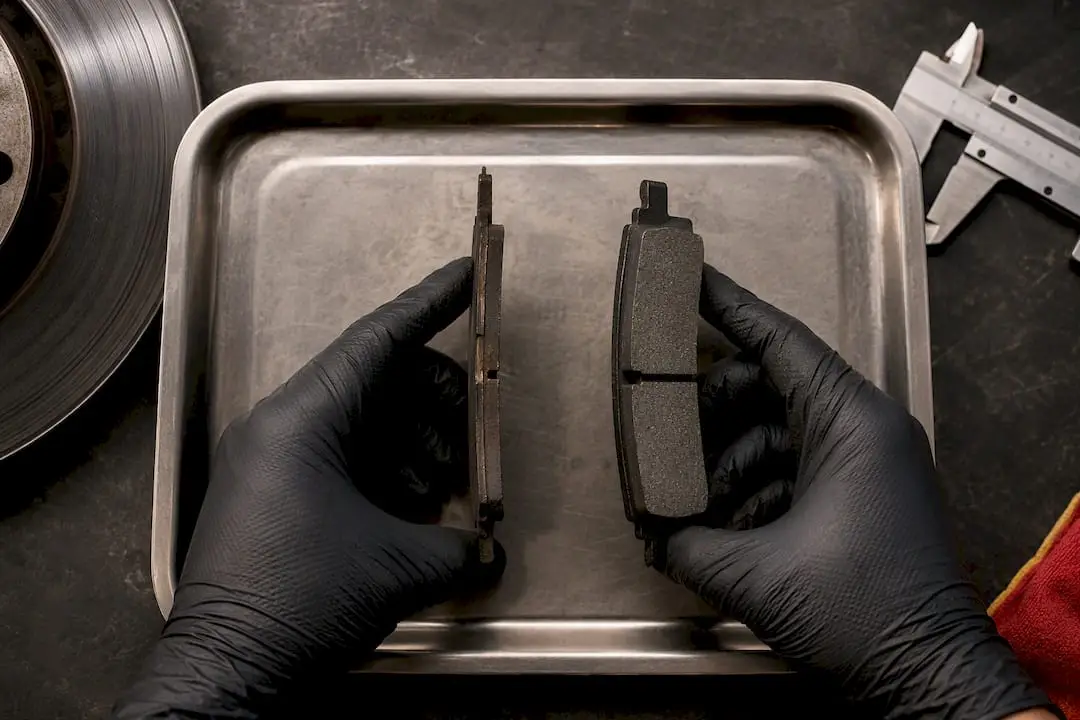
Glazed rotors from overheated, worn-out pads can also produce a pedal that feels fine but delivers reduced stopping power, which some drivers describe as “soft” even though the hydraulic system is functioning correctly. If your pedal feel changed at the same time you started noticing squealing, vibration, or a longer stopping distance, mention the pad wear question to your technician specifically so they check both systems rather than just one.
Does a Failing Brake Booster Cause a Soft Pedal?
The brake booster amplifies the force from your foot using vacuum from the engine (or an electric pump on some newer vehicles), so problems there tend to show up as a pedal that’s hard to push rather than spongy. A booster or vacuum leak usually makes the pedal feel stiff, high, and difficult to depress, since you’ve lost the power assist and are pushing against hydraulic resistance with your leg alone.
That said, vacuum system issues can create a pedal that feels inconsistent rather than uniformly soft. A cracked vacuum hose, a failing check valve, or a booster diaphragm that’s starting to leak can cause pedal feel to change depending on engine RPM or how many times you’ve pressed the pedal with the engine off. Some drivers describe this as the pedal feeling “different” or “unpredictable” rather than classically spongy, and it’s worth mentioning to a technician if your pedal feel seems to shift depending on driving conditions.
The distinction matters for diagnosis. A technician ruling out hydraulic causes, air, leaks, or master cylinder failure, will also check the booster and vacuum lines if the symptoms don’t fit the classic soft-and-sinking pattern. It’s a less common cause of true sponginess, but it belongs on the checklist, especially on older vehicles where vacuum hoses and check valves degrade with age and heat cycling.
Can ABS Problems Make the Brake Pedal Feel Soft?
Yes, and it’s a cause many drivers overlook because they assume ABS only matters during hard stops on wet or icy roads. The ABS module contains its own network of valves and, on many vehicles, a separate hydraulic control unit that fluid has to pass through. If air gets trapped inside that module, whether from a brake job that didn’t fully bleed the system or from a leak within the unit itself, the pedal can feel soft even after the rest of the system has been bled properly.
This is why a standard bleed sometimes doesn’t fully resolve a spongy pedal after a repair. Certain ABS units need to be cycled electronically with a scan tool as part of the bleeding procedure, a step that pushes fluid through every valve and chamber inside the module rather than just the accessible bleeder screws at each wheel. Skip that step, and trapped air stays right where a manual bleed can’t reach it.
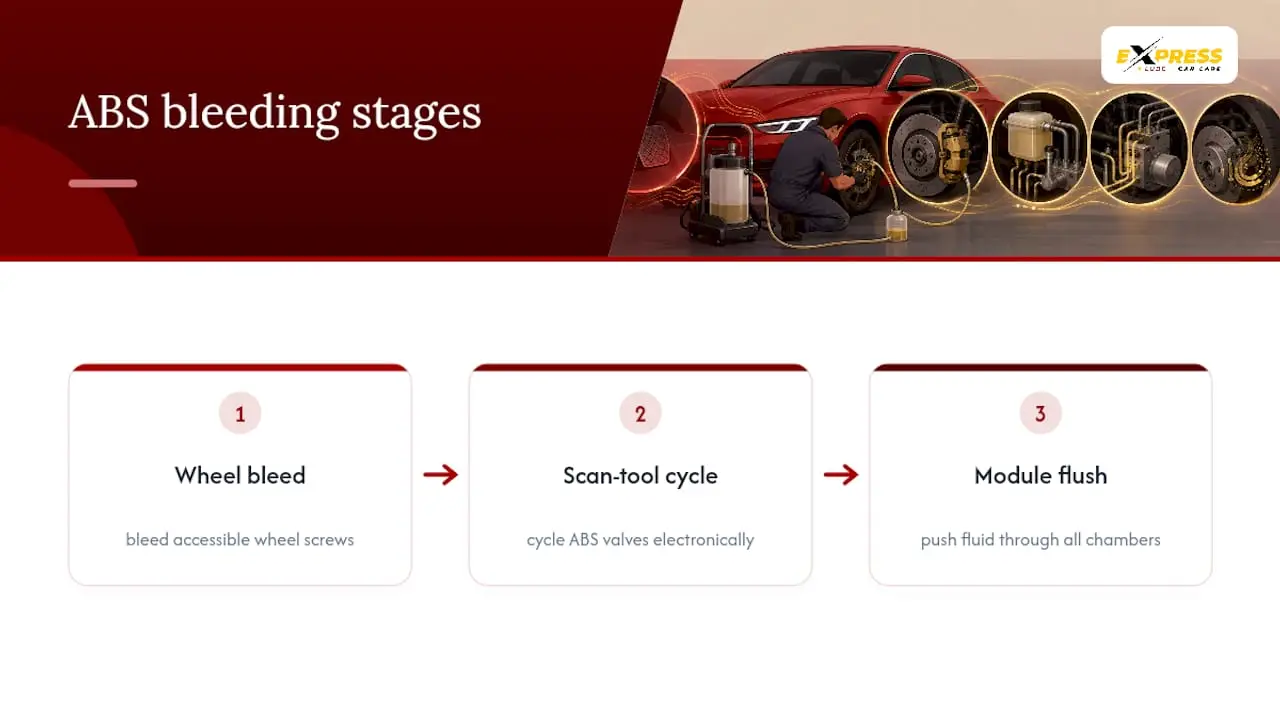
A failing ABS pump or a malfunctioning valve within the module can also cause intermittent pedal softness, sometimes paired with a pulsing sensation or an illuminated ABS warning light on the dash. If your pedal went soft after a recent brake job and a basic bleed didn’t fix it, or if the ABS light is on alongside the soft pedal, tell your technician specifically. It narrows the diagnosis considerably and points toward equipment most home mechanics don’t have access to.
Why Fast Diagnosis Matters for a Soft Brake Pedal
Hydraulic faults rarely stay the same. A slow leak becomes a fast one, and trapped air can shift and worsen with more driving. Quick diagnosis limits both part damage and risk. An ASE-certified technician who documents findings with clear notes and photos gives you a repair you can actually trust and verify.
Get Your Brakes Diagnosed Today
Express Lube & Car Care is the practical next step once you’ve done your own pump test and visual check, no waiting days for an appointment slot while a hydraulic problem gets worse. Our ASE-certified technicians handle brake diagnosis and repair with no appointment needed, and most jobs, from a straightforward bleed to hose or caliper replacement, are completed same day.
If your master cylinder needs replacing or your fluid is overdue for a full flush, our brake and fluid services cover the whole hydraulic system, not just a single symptom. When you bring the car in, tell us exactly what you noticed: when the pedal started feeling soft, whether it sinks or just feels low, and whether you’ve had any recent brake work done. That detail helps our technicians isolate the cause faster. Current customers can also take advantage of the $30 off brakes coupon toward diagnosis and repair. Stop by or check availability at Express Lube & Car Care today.
Sources
- Why Do My Brakes Feel Spongy? – Kelley Blue Book
- How To Diagnose a Spongy or Soft Brake Pedal – PowerStop Brakes
- Detecting and Diagnosing a Soft Brake Pedal – Tire Review
- Soft or Spongy Brake Pedal: Causes and Fixes | R1 Concepts
FAQ
How Do You Fix a Soft Brake Pedal?
The fix depends on the cause: bleeding removes trapped air, a full fluid flush addresses contaminated fluid, and a failing master cylinder or deteriorated hose requires replacement. A technician needs to isolate the actual cause before the correct repair is clear.
Why Is My Brake Pedal Soft but There’s No Leak?
A soft pedal with no visible leak commonly points to air trapped in the lines, moisture-contaminated fluid that’s starting to vaporize under heat, or a failing master cylinder bypassing fluid internally rather than externally.
Why Is My Brake Pedal Softer Than Usual?
A pedal that’s gradually gotten softer over time usually means your brake fluid has absorbed moisture and needs flushing, while a sudden change often signals air entering the system or a seal beginning to fail.
Is It Safe to Drive With a Soft Brake Pedal?
It depends on severity: if the pedal sinks to the floor or stopping feels unreliable, don’t drive it, arrange a tow instead. If it’s soft but still stops the car consistently, drive minimally and get it inspected right away.