

A stuck brake caliper is one that clamps the pads against the rotor and fails to let go, or fails to move freely in the first place. The usual signs are a car that pulls to one side, a burning smell after a drive, a dragging or sluggish feel, and pads that wear unevenly. If you notice them, have the brakes inspected soon. If you smell something acrid or see smoke from a wheel, pull over safely and stop driving.
This guide explains what a caliper does, how to tell a sticking caliper from other brake and steering problems, what usually causes it, and how a shop fixes it. Maintenance needs and repair steps vary by vehicle, so treat this as a map for the conversation with your technician, not a substitute for an inspection.
TL;DR
- A sticking or seized caliper typically shows up as a pull to one side, a burning smell, a dragging feel, grinding noise, or one pad wearing faster than the others.
- Corrosion, often tied to old brake fluid or a car sitting unused, is a common cause.
- A badly binding brake can overheat, damage the rotor and wheel components, and in severe cases start a fire, so do not keep driving on it.
- Repair usually means rebuilding or replacing the caliper, and calipers are best replaced in pairs on the same axle.
- We inspect brakes without an appointment at Express Lube & Car Care in Plano and can show you what we find with photos.
Table of Contents
- What a brake caliper does and what “stuck” means
- Stuck brake caliper symptoms
- What causes a brake caliper to stick
- Is it a caliper, a tire, or something else?
- How a technician checks for a sticking caliper
- Is it safe to drive with a stuck caliper?
- Can a stuck caliper be freed up, or does it need replacing?
- What if the car has been sitting and the brakes are locked?
- Perspective: why we inspect the whole brake corner
- Get your brakes checked in Plano
- Preventing caliper problems
- FAQ
- Sources
What a brake caliper does and what “stuck” means
The caliper is the clamp around your brake rotor. When you press the pedal, hydraulic pressure pushes a piston (or pistons) inside the caliper, and the piston squeezes the brake pads against the spinning rotor. When you let off the pedal, the piston should retract slightly and the caliper body should float or slide just enough for the pads to clear the rotor.
Two things can go wrong. The piston can stop moving freely, or the slide pins that let the caliper float can bind. According to AA1Car’s brake caliper reference, a frozen piston may fail to apply the brake or, more commonly, fail to release it, and a sticking slide on a floating caliper can leave the pads dragging.
Mechanics use “stuck,” “sticking,” “seized” and “binding” loosely. In practice:
- Sticking usually means the caliper releases slowly or only partly, so the pads drag lightly.
- Seized means a part of the assembly no longer moves at all. In the extreme case the brake stays applied and the wheel will barely turn.
Either way, the pads are rubbing when they should be clear, and that friction makes heat.
Stuck brake caliper symptoms
A single symptom does not prove a caliper problem, but a pattern points the right way. Here is what to watch for.
The car pulls to one side
The caliper that drags creates more resistance on its own wheel, so the car drifts toward that side. Haynes lists pulling while braking or cruising, a burning smell, reduced braking performance and a dragging sensation among the signs, along with a feeling that the car is sluggish, as if the parking brake were on. Brake and Front End notes that a pull that gets worse after a hard brake application is a likely sign of a stuck piston.
Pulling has other causes too, including tires and alignment, so our guide to why a car pulls to the right is worth reading alongside this one.
A burning smell after driving
An acrid, hot smell from one wheel is one of the clearest warnings. Haynes says a distinct burning smell often means a seized brake is overheating, which may lead to smoke and potentially a fire. Treat this as urgent.
Grinding or other brake noise
AutoZone notes that a sticking caliper may cause grinding noises. Ferodo also lists noise during braking among the signs tied to caliper or guide-pin sticking. Noise alone is not a diagnosis: worn pads, glazed rotors and debris can all make similar sounds. If you hear a metallic squeal, our article on the brake pad wear indicator explains that separate issue.
Uneven pad wear
When one pad on an axle is worn far more than the other side, or the inner pad is thinner than the outer on the same wheel, the caliper may not be moving the way it should. Ferodo’s guidance also lists uneven pad wear and overheating on one side as indications. We cover the full range of causes in what causes uneven brake pad wear.
A hot wheel or reduced braking and fuel economy
A dragging brake works against the engine all the time. You may notice weaker acceleration, a wheel that is much hotter than the others after a normal drive, or a brake pedal that feels different. Do not touch rotors or wheels to check: they can burn you.
Quick symptom reference
| What you notice | What it may mean | What to do |
|---|---|---|
| Pull to one side while braking | Stuck piston or slide pins on the pulling side, or a tire or alignment issue | Schedule a brake inspection soon |
| Burning smell from a wheel | Dragging brake overheating | Stop safely and do not keep driving |
| Grinding when braking | Worn pads, debris or a binding caliper | Inspect promptly |
| One pad much thinner than its mate | Caliper or slide pin not moving freely | Inspect the whole axle |
| Car feels sluggish, as if the parking brake is on | Brake not fully releasing | Inspect before further driving |
What causes a brake caliper to stick
The most common cause is corrosion. A few patterns show up again and again.
Moisture in old brake fluid. Brake fluid absorbs moisture over time. AutoZone explains that corrosion inside caliper pistons from moisture in old fluid is a common cause of sticking brakes, and that changing the fluid every couple of years can help prevent it. Your owner’s manual gives the interval for your vehicle, and we break down the options in our brake fluid change interval guide.
Sitting unused. Haynes points out that a seized caliper often results from inactivity combined with corrosion, especially when a vehicle sits in a damp environment for months. A second car that rarely leaves the driveway, or a vehicle parked during a long deployment or extended trip, is a fair example.
Binding slide pins or worn hardware. If the pins that let the caliper float lose lubrication or rust, the caliper cannot center itself over the rotor and the pads drag.
Damaged piston seals or boots. A torn rubber boot lets water and grit into the piston bore. A leaking seal can show up as wet brake fluid around the caliper, which is a safety problem on its own.
Heat and hard use. HELLA notes that extreme driving conditions or sustained braking can cause thermal overload of the pads, which is one reason a caliper problem that starts small can get worse quickly once the brake begins dragging.

Is it a caliper, a tire, or something else?
A pull or vibration does not always mean a caliper. A few simple distinctions help you describe the problem accurately.
- Tire-related pull. Brake and Front End suggests that swapping tires side to side can help rule out tires. If the pull moves to the other side, the tire was the cause.
- Heat difference. The same source describes using a non-contact infrared thermometer to compare wheel temperatures. A significantly hotter rotor points to a brake problem instead of steering or suspension. Technicians use this at the shop; it is not a reason to touch a hot wheel.
- Pulsing pedal. A shudder through the pedal is more often a rotor issue than a caliper issue. See our guide to warped rotor symptoms.
- General brake wear. Soft pedal, long stopping distance and squeal are covered in 8 key signs your vehicle needs new brakes, and our signs of bad brake calipers article goes deeper into the caliper-specific list.
How a technician checks for a sticking caliper
A proper check is a short, structured process, and it is why we recommend letting a professional handle it. Here is the general shape.
- Listen to your description. Which side pulls, when it happens, any smell or noise, and how long the car sat.
- Test drive. To feel the pull, drag and pedal behavior.
- Compare wheel temperatures. A hotter wheel after a drive is a clue.
- Lift the vehicle safely and turn each wheel by hand. A government education resource on disc brakes describes the method: block the wheels, release the parking brake, place the transmission in neutral, raise the axle on a safety stand, and rotate the wheel by hand. If it does not turn freely, the disc brake needs attention.
- Inspect the caliper, pins, boots, pads and rotor. Look for a torn boot, fluid leaks, rust on the piston, seized slide pins and uneven pad wear.
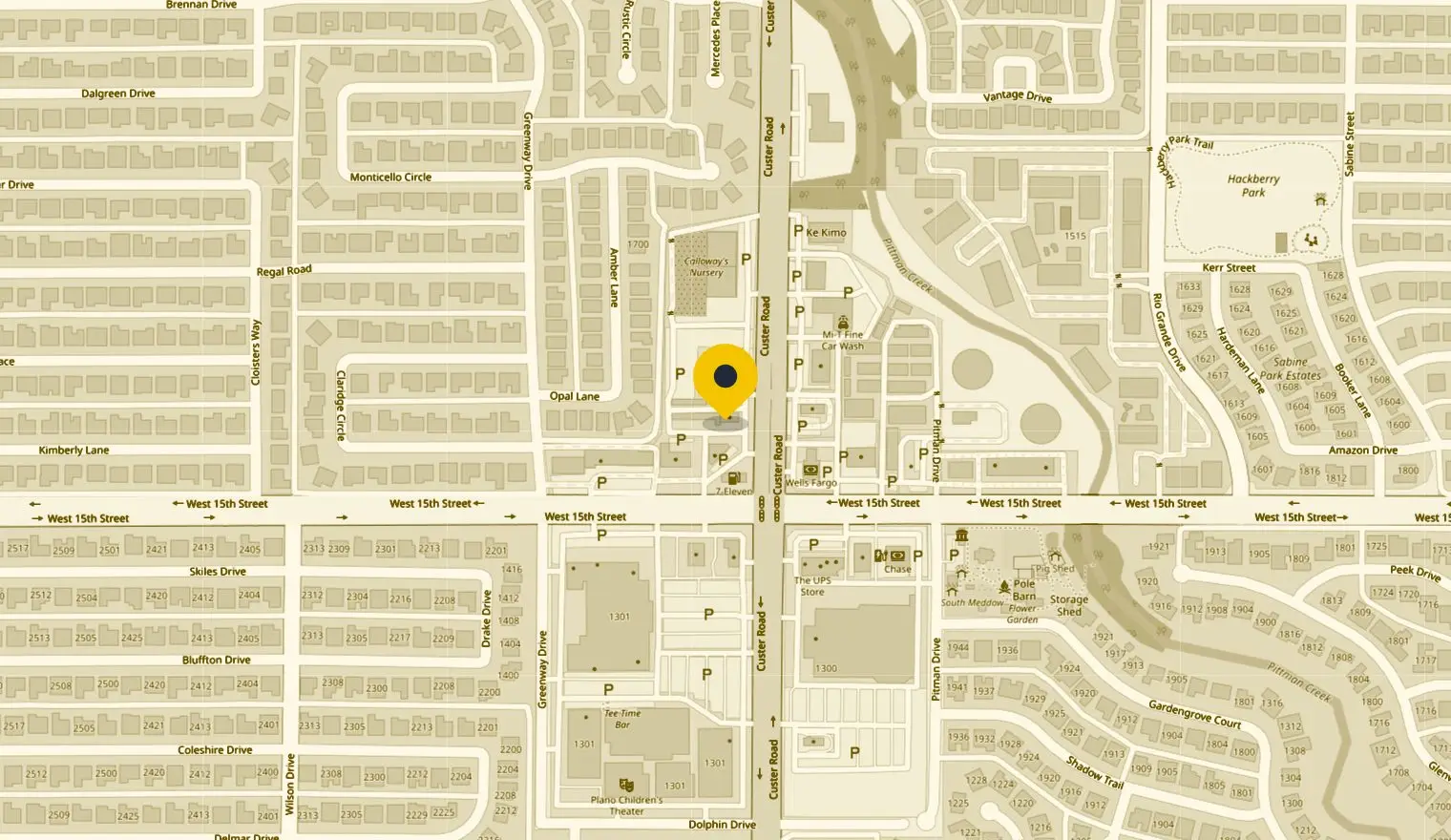
At our Plano shop, a digital vehicle inspection includes photos and technician notes, so you can see what the technician saw instead of taking it on faith.
Is it safe to drive with a stuck caliper?
Not for long. A dragging brake produces constant friction, and the heat has to go somewhere. Haynes warns that a badly binding brake can generate enough heat to start a fire and damage the discs and wheel-hub components, and says that if a seized brake gets very hot or smokes, you should stop.
Here is a practical way to think about it:
- Smoke, a strong burning smell, or a wheel that will barely turn: pull over somewhere safe, stop driving and arrange a tow. Do not touch the wheel.
- Mild pull or drag with no smell: book an inspection promptly and avoid long highway drives or heavy braking until it is checked.
- Brake fluid leaking or a pedal that sinks: do not drive the vehicle. These are hydraulic problems that call for immediate professional help.
A lightly sticking caliper left alone tends to ruin pads and rotors early, which turns a modest repair into a bigger one. Heat can also degrade the brake fluid and seals, making the original problem worse.
Can a stuck caliper be freed up, or does it need replacing?
Sometimes it can be repaired. Haynes explains that a seized caliper can often be rebuilt by disassembling and cleaning it, then replacing the rubber parts and sometimes the piston, while replacing the entire caliper is also an option.
Which route makes sense depends on the condition of the part:
| Condition | Typical approach |
|---|---|
| Seized slide pins, dry hardware, light surface rust | Clean, lubricate or replace pins and hardware, then replace pads if needed |
| Torn boot or seal, light piston corrosion | Rebuild or replace the caliper, depending on the vehicle and part availability |
| Deep pitting on the piston or bore, leaking seal | Replace the caliper |
| Severe rust on the caliper body | Replace the caliper |
Advics, a brake manufacturer, states that severe rust damage to the caliper body warrants full replacement rather than repair.
Two more points matter. First, AutoZone recommends installing calipers in pairs, both front or both rear, so braking stays balanced. Second, a stuck caliper often has done collateral damage, so the pads and rotor on that wheel usually need inspection and may need replacing. Our guide to brake pad vs rotor wear explains how those measurements are judged, and what brake service includes shows what a complete job covers. Fresh brake fluid and a bleed after the work are standard parts of getting the system back to a healthy state.
How long does a caliper replacement take?
There is no single answer. The time depends on the vehicle, whether the caliper is front or rear (some rear calipers include a parking brake mechanism), how rusted the hardware is, and whether pads, rotors and a fluid flush are done at the same time. Ask your technician for an estimate once the vehicle has been inspected. Because we offer same-day service on most repairs, many jobs can be handled during your visit, and we will tell you plainly when parts or extra work change that.
What if the car has been sitting and the brakes are locked?
A vehicle that has been parked a long time can have seized brakes on one or more wheels, and sometimes the car will not roll. Do not try to force it by driving off. Forcing a seized brake can damage the rotor, hub and surrounding parts. Have it towed to a shop for inspection, where a technician can decide whether the calipers, pads and rotors can be saved.
Some owners decide a long-neglected vehicle is not worth repairing. If that is your situation, this overview of selling a car with seized brakes explains what the problem means for a sale. For a vehicle you plan to keep, a proper inspection will tell you what the repair would involve.
Perspective: why we inspect the whole brake corner
We see sticking calipers most often as a symptom, not a cause. The caliper may be the part that failed, but the reasons are usually old fluid, seized hardware or a boot that let moisture in. Replacing only the caliper without looking at the rest can bring the same problem back.
That is why our technicians look at the full brake corner: pads, rotor, slide pins, boots, hoses and fluid condition. Our digital vehicle inspections put photos and notes in front of you, so the decision on what to fix is yours and based on what is actually there.
We would rather you come in at the first pull or smell than after a wheel has overheated. Our technicians are ASE-certified, most services are completed the same day, and we do not require an appointment.
Express Lube & Car Care
Get your brakes checked in Plano
If your car pulls, smells hot after a drive or wears pads unevenly, we can inspect it without an appointment. Our technicians check the calipers, pins, pads, rotors and fluid, then walk you through what they found with photos and notes. See our brake repair services for what we handle, or browse all our services.
Qualifying repairs are backed by our 24-month/24,000-mile limited warranty, whichever comes first. Eligibility, limitations and exclusions apply, and not every repair is covered, so ask us about the terms for your job. There is also a brake coupon on our site; check the page for its current terms.
Preventing caliper problems
You cannot eliminate corrosion, but you can slow it down.
- Follow your vehicle’s brake fluid schedule. Fluid absorbs moisture over time, and your owner’s manual lists the manufacturer’s interval.
- Drive stored vehicles. If a car sits, start it and drive it periodically so the pistons and slide pins move.
- Ask for brake hardware to be serviced at pad replacement. Clean, lubricated pins and intact boots help the caliper float.
- Do not ignore early signs. A mild pull or an uneven pad is a cheap warning compared with a seized brake.
- Inspect at regular service. AutoZone notes that routine maintenance gives chances to visually check for wear, including uneven pad wear.
Texas drivers should also remember that passenger-vehicle brake condition matters whether or not it is part of an inspection. Brakes are a safety system, and a problem is worth fixing on its own timeline, not an inspection’s.
FAQ
What are the first signs of a sticking brake caliper?
The earliest signs are usually a gentle pull to one side, a pad that wears faster than its partner, or a hot smell after a drive. Some drivers notice the car feels sluggish, as if the parking brake were partly on. Any of these is a reason for a brake inspection.
Can you drive with a stuck brake caliper?
Only briefly, and only to get to a shop when the symptoms are mild. A dragging brake builds heat that can damage the rotor and wheel components and, in severe cases, start a fire. If you smell burning or see smoke, stop safely and arrange a tow.
Can a stuck caliper be repaired, or must it be replaced?
Sometimes a caliper can be cleaned and rebuilt with new rubber parts, and sometimes the piston too. Severe rust or a damaged piston bore calls for replacement. Calipers are best replaced in pairs on the same axle, so ask your technician which option suits your vehicle.
What causes a brake caliper to seize?
Corrosion is the leading cause, often from moisture in old brake fluid or from a vehicle sitting unused in a damp environment. Binding slide pins and torn rubber boots also contribute. Following the brake fluid schedule in your owner’s manual helps prevent it.
Is a stuck caliper the same as a bad brake pad?
No, though one can cause the other. A dragging caliper wears pads quickly, while worn pads cause noise and weaker braking without necessarily making the car pull. An inspection of the whole brake corner tells you which problem you have.
Sources
- AA1Car: Brake Calipers
- Haynes: How To Diagnose and Fix a Seized Brake Caliper
- Brake & Front End: Finding the Cause of Brake Pulls
- Ferodo: Brake Pad Trouble Tracers
- AutoZone: Brake Caliper Sticking
- HELLA: Failure Modes of Brake Discs and Brake Pads
- Louisiana DENR: Car, Van, and Light Truck Disc Brakes
- Advics: Troubleshooting a Seized Caliper
- Selling a car with seized brakes